Column · @currentandcharge
Garage, driveway, or carport EV charging locations compared
Choosing where to charge an electric vehicle at home is not just about convenience. The location you pick affects installation cost, safety, and how well the charger performs day to day. Most homeowners consider three main spots: the garage, the driveway, and the carport. Each has its own electrical and practical demands, and understanding those differences helps you plan a setup that works for years.
Garage charging: the standard choice
A garage is the most common place to install a dedicated EV circuit. The space is enclosed, sheltered from weather, and usually has an existing electrical panel nearby. That proximity matters because running a new circuit from the panel to the charger location is one of the biggest variables in any installation. A shorter run means less conduit, less labor, and fewer potential points of failure.
Garages also offer natural security. The vehicle and the charging cable stay out of sight when the door is closed. That reduces wear from sun and rain and makes it harder for someone to tamper with the equipment. Many homeowners also appreciate that they can charge overnight without worrying about the cable being a tripping hazard on a walkway or driveway.
One limitation is space. A single-car garage can feel cramped once the car is inside and the charger is mounted on the wall. You need enough room to walk around the vehicle and reach the charge port without squeezing between the bumper and a workbench or storage shelves. If the garage doubles as a workshop or storage area, the charger location must be planned so the cable does not snag on things or get run over by a bicycle or lawn equipment.
Driveway charging: flexibility with trade-offs
Driveway charging is common when the garage is full, too small, or used for something else. It is also the only option for households that park outside because the garage is not built or has been converted into living space. A dedicated EV circuit installed for driveway use usually runs from the house panel through conduit buried in the ground or attached to an exterior wall, ending at a pedestal or wall-mounted unit near the parking spot.
The main advantage is flexibility. You can park in the driveway without having to shuffle vehicles or clear out the garage. That is especially helpful for multi-car households where one EV is parked outside while another vehicle or storage uses the garage. Driveway setups also work well for renters or guests who need to charge temporarily, though the homeowner is responsible for the installation.

The downsides are mostly about exposure. Rain, snow, direct sun, and temperature swings affect the charger and cable over time. A quality outdoor-rated unit handles weather well, but the charging cable still gets dirty and can become stiff in cold weather. The cable also lies across the driveway or walkway, which can be a tripping hazard for pedestrians or a risk of being driven over by another vehicle. Some homeowners install a cable protector ramp to reduce that risk, but it adds an extra step every time you plug in.
Another consideration is the distance from the house. If the driveway is long or the panel is on the far side of the house, the circuit run becomes longer, which increases material and labor costs. A longer run also means more voltage drop, so the wire gauge may need to be larger to maintain efficient charging. A qualified electrician can calculate the right wire size based on the distance and the amperage of the dedicated EV circuit.
Carport charging: a middle ground
A carport sits between garage and driveway in terms of protection and cost. It provides a roof over the vehicle, which shields the charger and cable from direct rain and sun, but it is open on the sides. That means the equipment is still exposed to wind-blown moisture, dust, and temperature changes, though less severely than a fully exposed driveway.
Carports are often attached to the house or a detached structure such as a barn or workshop. If the carport is attached, the electrical run from the house panel can be relatively short, similar to a garage installation. For a detached carport, the run must cross the yard or driveway, which adds complexity and cost. In that case, trenching and conduit are required, and the circuit must be grounded properly at the carport location.
One advantage of carport charging is that you can keep the charger mounted on a post or wall under the roof, out of direct weather. The cable stays cleaner and lasts longer than one left on the ground in the driveway. The open sides also mean you do not have to open and close a garage door every time you charge, which is a small but real convenience for people who come and go multiple times a day.
Security is a trade-off. The vehicle and charger are visible from the street, which some homeowners find less private. On the other hand, the visibility can act as a deterrent to theft, since the equipment is in plain sight. A lockable charger or a locking holster for the cable adds a layer of protection.
What a dedicated EV circuit means for each location
No matter which location you choose, the heart of the setup is a dedicated EV circuit. That means a circuit breaker in the electrical panel that serves only the charger, with wiring sized for the continuous load of charging. A typical Level 2 charger draws 30 to 50 amps, so the circuit must be rated for that amperage plus a safety margin. The circuit also requires proper grounding and, in most cases, a GFCI breaker for outdoor installations.

The electrical panel itself must have enough capacity. An older home with a 100-amp panel may already be near its limit from lighting, appliances, and HVAC. Adding a 50-amp EV circuit could overload the panel unless a load calculation shows there is room. If the panel is full or undersized, an upgrade may be needed before the dedicated circuit can be installed. That is a job for a licensed electrician, not a DIY project.
The type of conduit and wiring also depends on location. Indoor runs in a garage can use less expensive nonmetallic sheathed cable, provided it is protected from physical damage. Outdoor runs require conduit rated for wet locations, such as PVC or rigid metal conduit, and wiring rated for outdoor use. Buried conduit must be at least 18 inches deep for PVC or 6 inches for rigid metal, and the trench must be marked before digging to avoid hitting other utilities.
When each location suits you best
Garage charging is ideal if you have an attached garage with a panel nearby and you park inside most of the time. It offers the best protection for equipment and the simplest electrical path. If the garage is detached, the cost rises but the benefits of shelter and security still apply.
Driveway charging works when the garage is not available or when you need to charge a second EV that parks outside. It is also a practical choice for households with a long driveway and no carport. The trade-offs are weather exposure and the need to manage the cable across a walking or driving surface. For more details on planning a driveway installation, woodingelectric.com has resources on dedicated EV circuits and outdoor charging setups.
Carport charging fits the middle scenario. If you have a carport already, it is often cheaper and easier than trenching to a driveway pedestal, and it provides better weather protection than an open driveway. It also avoids the hassle of opening and closing a garage door every time you plug in. For detached carports, the cost of running power across the yard must be weighed against the convenience.
Planning ahead for future needs
Whichever location you choose, think about future changes. If you might add a second EV, consider installing a dedicated EV circuit with a higher amperage rating or running conduit large enough for two circuits later. Some homeowners also run a spare conduit from the panel to the charging location while the trench is open, even if they only need one circuit now. That small upfront cost saves a lot of work later.
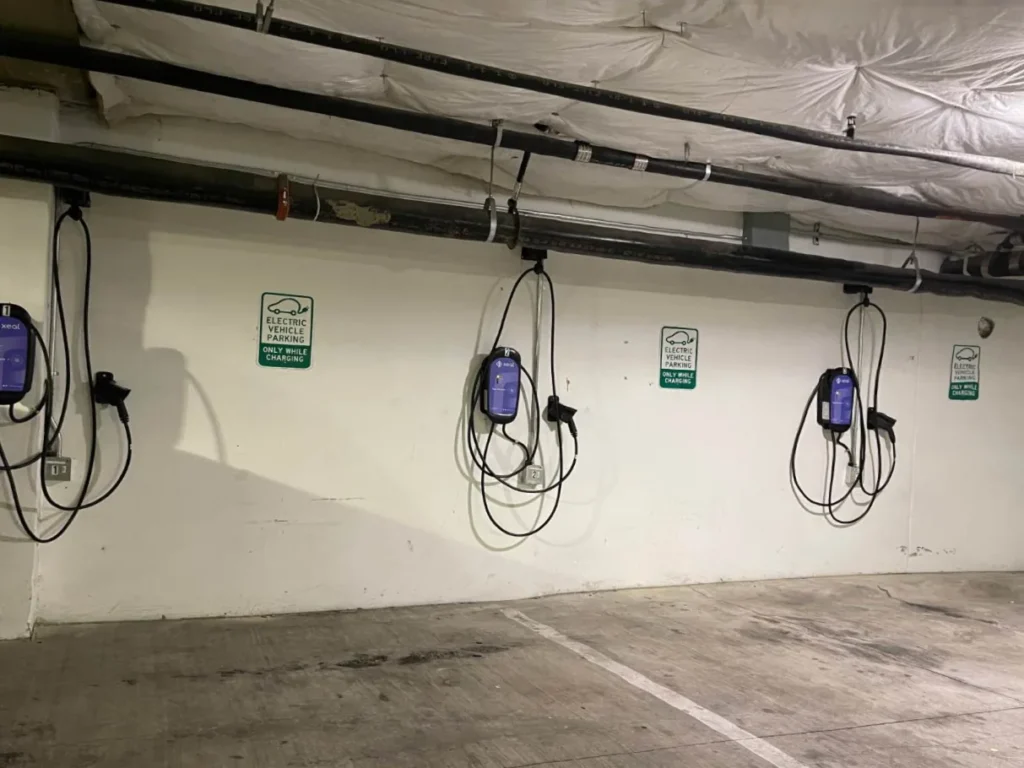
Also think about cable management. A charger mounted on a wall or post with a built-in cable holster keeps the cable off the ground and out of the way. For driveway installations, a pedestal mount keeps the charger at a comfortable height and reduces the chance of the cable being damaged by vehicles or lawn equipment.
Finally, check local codes and permitting requirements. Most jurisdictions require a permit for a new dedicated EV circuit, especially if it involves trenching or an outdoor disconnect. A qualified electrician handles the permitting and inspection process, ensuring the installation meets code and is safe. For homeowners in the San Jose and Bay Area region, woodingelectric.com provides installation services for dedicated circuits and Level 2 chargers in garages, driveways, and carports, matching the setup to the property.
Choosing between garage, driveway, and carport charging comes down to your parking habits, the layout of your home, and how much you want to protect the equipment from the elements. Each option works well when the dedicated EV circuit is planned properly and installed by a professional. A little thought upfront about where you park and how you use the space makes the daily charging routine simple and reliable.